
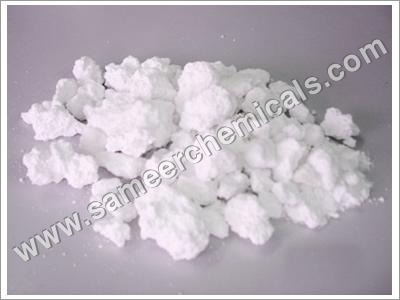
Calcium Chloride Anhydrous Lumps
Product Details:
- Melting Point 183°C to 185°C
- Ph Level Neutral to slightly acidic (5-7)
- Refractive Rate 1.597
- Molecular Formula CaCl2
- Poisonous YES
- Solubility Slightly soluble in water highly soluble in ethanol and other organic solvents
- Physical Form Powder
- Click to View more
X
Calcium Chloride Anhydrous Lumps Price And Quantity
- 3 Ton
Calcium Chloride Anhydrous Lumps Product Specifications
- Stimulus
- Highest
- Powder
- Slightly soluble in water highly soluble in ethanol and other organic solvents
- CaCl2
- YES
- 1.597
- Neutral to slightly acidic (5-7)
- 183°C to 185°C
Calcium Chloride Anhydrous Lumps Trade Information
- Per Day
- 1 Week
Product Description
Calcium Chloride Anhydrous Lumps
Clients can purchase from us accurately processed grade Calcium Chloride Anhydrous Lumps. Owing to its insolubility in water, the provided lumps are widely used as desiccant for various solvent. This chemical is processed using quality-tested chemical compounds and modern technology in line with set industry quality standards at our in-house production unit. Apart from this, our esteemed clients can purchase these Calcium Chloride Anhydrous Lumps from us in various packaging options as per their wide requirements at cost-effecting prices.
Calcium Chloride Anhydrous Lumps Features:
- Longer shelf life
- Accurate composition
- Purity
- Effectivenes
Products Other Information:
Calcium chloride Basic information
- Product Name: Calcium chloride
- Synonyms: PELADOW(R) SNOW AND ICE MELT Anhydrous calcium chloride;anhydrouscalciumchloride;CaCl2;Calcium chloride (CaCl2);Calcium chloride pellets;calciumchloraide;calciumchloride(anhydrous)
- CAS: 10043-52-4
- MF: CaCl2
- MW: 110.98
- EINECS: 233-140-8
- Mol File: 10043-52-4.mol
Calcium chloride Chemical Properties
- Mp 772 °c(Lit.)
- Bp 1600 °c
- Density 1.086 G/Ml At 20 °c
- Vapor Pressure 0.01 Mm Hg ( 20 °c)
- Refractive Index N20/D 1.358
- Fp >1600°c
- Storage Temp. 2-8°c
- Solubility H2o: Soluble
- Form Powder
- Water Solubility 740 G/L (20 ºc)
- Sensitive Hygroscopic
- Merck 14,1659
- Stability: Stable. Incompatible With Zinc, Water, Strong Acids, Methyl Vinyl Ether, Bromine Trifluoride, Boron Oxide, Calcium Oxide. Hygroscopic.
- Cas Database Reference 10043-52-4(Cas Database Reference)
- Nist Chemistry Reference Calcium Dichloride(10043-52-4)
- Epa Substance Registry System Calcium Chloride (Cacl2)(10043-52-4)
Safety Information
- Hazard Codes Xi
- Risk Statements 36/37/38-36-36/38-41-22
- Safety Statements 26-39-24-22-36
- F 3
- HS Code 28272000
- Hazardous Substances Data 10043-52-4(Hazardous Substances Data)
Calcium chloride Usage And Synthesis
- Chemical Properties white beads or powder
- Usage desiccant
- Usage: For the treatment of hypocalcemia in those conditions requiring a brief increment in blood plasma calcium levels, for the treatment of magnesium inebriation because of over dosage of magnesium sulfate, and used to battle the malicious impacts of hyperkalemia
- General Description : White to grayish strong. Sinks and blends with water.
- Air and Water Reactions: Deliquescent. Water dissolvable. Adding Calcium chloride to high temp water created rough bubbling, [MCA Case History No. 69].
- Reactivity Profile: Bromine trifluoride quickly assaults the accompanying salts: barium chloride, cadmium chloride, Calcium chloride, cesium chloride, lithium chloride, silver chloride, rubidium chloride, potassium bromide, potassium chloride, potassium iodide, rhodium tetrabromide, sodium bromide, sodium chloride, and sodium iodide [Mellor 2 Supp. 1:164, 165 1956]. Long haul introduction of Calcium chloride arrangement upon a zinc covered stirred iron vessel brought about moderate development of hydrogen which lighted and blasted [Bretherick, fifth Ed., 1995].
- Health Hazard: Inhalation causes bothering of nose and throat. Ingestion causes aggravation of mouth and stomach. Contact with eyes (especially by dust) causes disturbance and conceivable transient corneal harm. Contact of strong with dry skin causes gentle aggravation; solid arrangements can bring about checked bothering, even a shallow blaze.
Calcium chloride Preparation Products And Raw materials
- Raw materials Hydrochloric acid-->Calcium carbonate-->Calcium hydroxide -->Calcium oxide-->Sodium chlorate-->CALCIUM CARBONATE-->Calcium chloride hexahydrate-->Calcium chloride solution 36-40%, (1box=27kgs)-->Calcium chloride dihydrate
Applications of Calcium Chloride Anhydrous Lumps
Calcium Chloride Anhydrous Lumps serve a variety of industrial purposes, including use as a desiccant, in concrete acceleration, and as a freezing point depressant. Their high purity and physical form make them suitable for demanding environments requiring rapid water absorption or chemical reactivity.
Manufacturing and Export Standards
Produced and supplied directly from India, our Calcium Chloride Anhydrous meets strict quality control protocols. As both a manufacturer and exporter, we ensure that every batch leaves our facility after passing comprehensive purity and safety checks, offering reliable solutions worldwide.
FAQ's of Calcium Chloride Anhydrous Lumps:
Q: How is Calcium Chloride Anhydrous Lumps used in industrial applications?
A: Calcium Chloride Anhydrous Lumps are primarily used as desiccants, de-icing agents, and in concrete acceleration due to their moisture-absorbing and chemical-reactive properties. They are also widely valued in laboratory and industrial processes requiring a high-purity, moisture-control component.Q: What are the safety precautions for handling Calcium Chloride Anhydrous Lumps?
A: Because Calcium Chloride Anhydrous is poisonous, it is essential to wear protective gear such as gloves, goggles, and appropriate clothing when handling. Work in a well-ventilated area and avoid ingestion or direct skin contact. Always follow your facility's safety protocols.Q: When should I opt for anhydrous calcium chloride over other forms?
A: Anhydrous calcium chloride is ideal when you require maximum water absorption capability or need to control moisture without adding extra water to the process. Its high purity and efficient performance in various solvents make it preferable in laboratory and industrial settings.Q: Where is your Calcium Chloride Anhydrous Lumps manufactured and exported from?
A: Our Calcium Chloride Anhydrous Lumps are produced and rigorously quality-checked in India. We cater to both domestic and international markets as a trusted exporter, manufacturer, and supplier.Q: What is the process for ordering Calcium Chloride Anhydrous Lumps from your company?
A: To order, contact our sales team through our website or provided communication channels. Specify your required quantity and any special packaging or documentation needs. We will guide you through payment, shipping, and delivery steps with clear timelines.Q: How does solubility in different solvents benefit industrial processes?
A: The high solubility of Calcium Chloride Anhydrous in ethanol and organic solvents enables its application in specialized chemical syntheses and moisture-sensitive processes where water solubility may be undesirable, affording versatility in various industries.Tell us about your requirement

Price:
Quantity
Select Unit
- 50
- 100
- 200
- 250
- 500
- 1000+
Additional detail
Mobile number
Email


Contact Details

- 501, Aurum, Makrand Desai Road, Nr Vasna Hp Petrol Pump, Vadodara - 390015, Gujarat, India
- Phone : 07971191305
SAMEER CHEMICALS
GST : 24ABZPB6303M1ZE

- Mr. Sameer Bhaskaran (Director)
- Mobile : 07971191305
- Send Inquiry
 Send Inquiry
 Send Inquiry
 Send SMS
SAMEER CHEMICALS
All Rights Reserved.(Terms of Use)
Developed and Managed by Infocom Network Private Limited.
Developed and Managed by Infocom Network Private Limited.
